
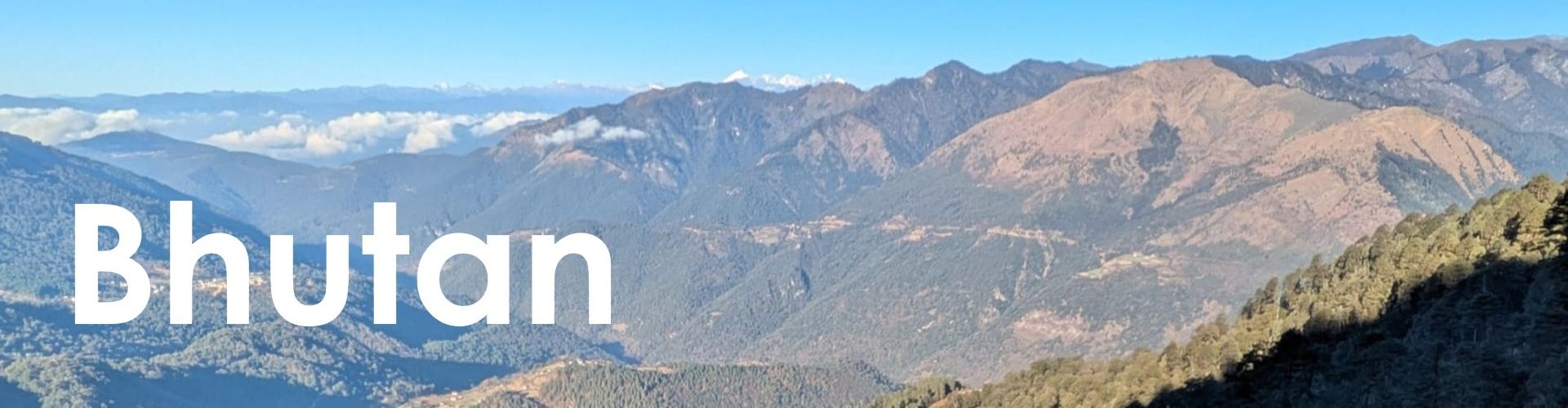
Bhutan - birds and wildlife of the eastern Himalayas
The ‘Land of the Thunder Dragon’ sits high in the eastern Himalayas, sandwiched between India and China.
Download leaflet
Wildlife Travel leaflet Bhutan 2027
Dates
30th April – 18th May 2027
new holiday
two places left
Leader
Price
£7,785
Single Room Supplement – £450
Included
Return flights as described. Local transport as specified in itinerary. Seventeen nights accommodation (one extra on overnight flight), full board. Bhutan Visitor Tax ($100 US per day). Bhutan Visa Fee and National Monument/National Park entry fees.
Not included
Refreshments. Gratuities. Travel insurance. Visa costs.
Group size
Minimum 4, maximum 10.
Through a combination of its isolation, and the strong Buddhist ethos of its people, Bhutan has held on to much of its traditional way of life, its traditional architecture and, unlike its neighbours, much of its forests: more than 2.5 million hectares, covering over 70% of the country.
During our time in Bhutan, we will explore these forests, from the rhododendron and Bhutan Pine forests of the high mountain passes to the lush subtropical rainforests of Royal Manas National Park, in the lowlands of the Indian border.
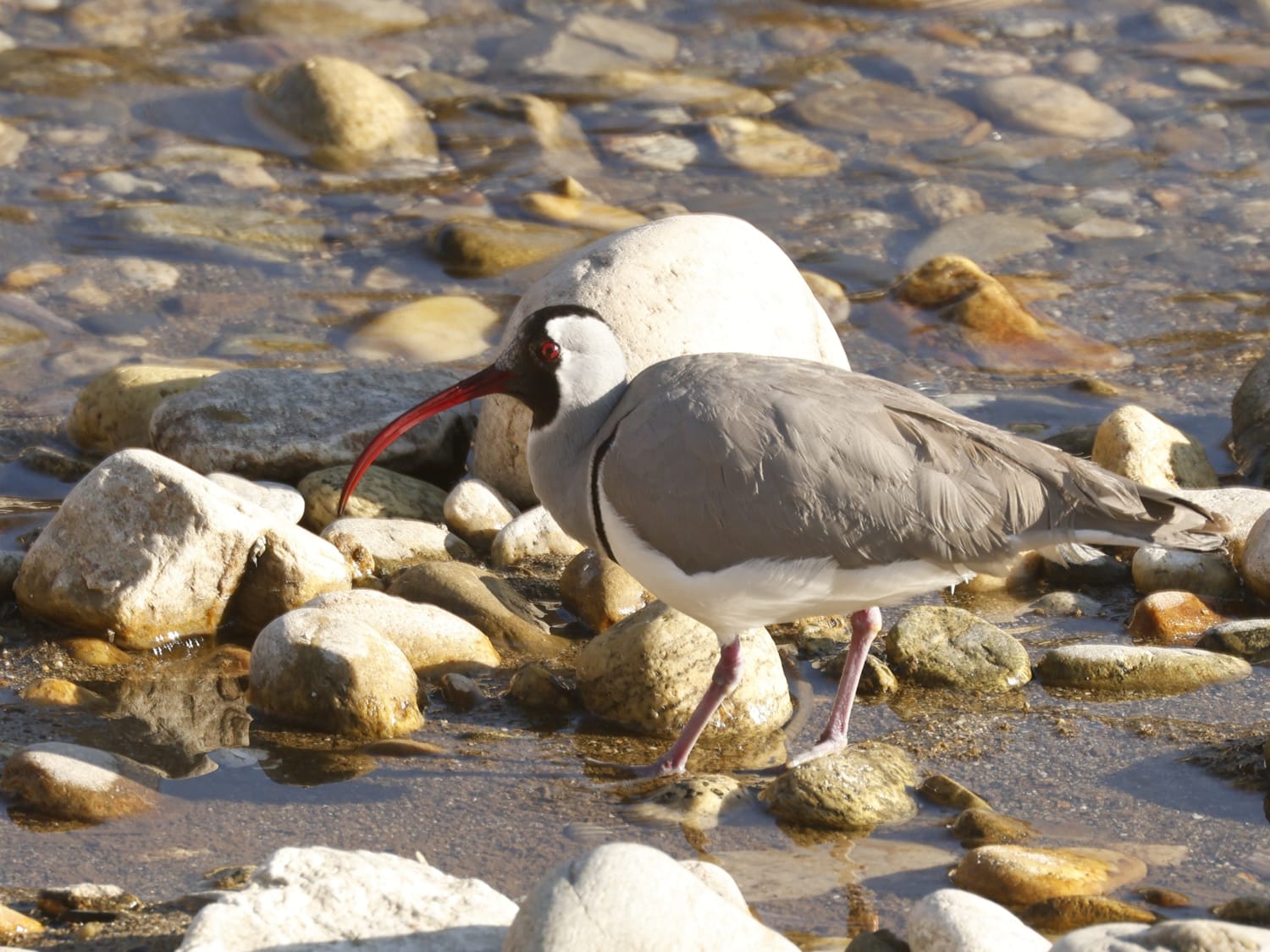
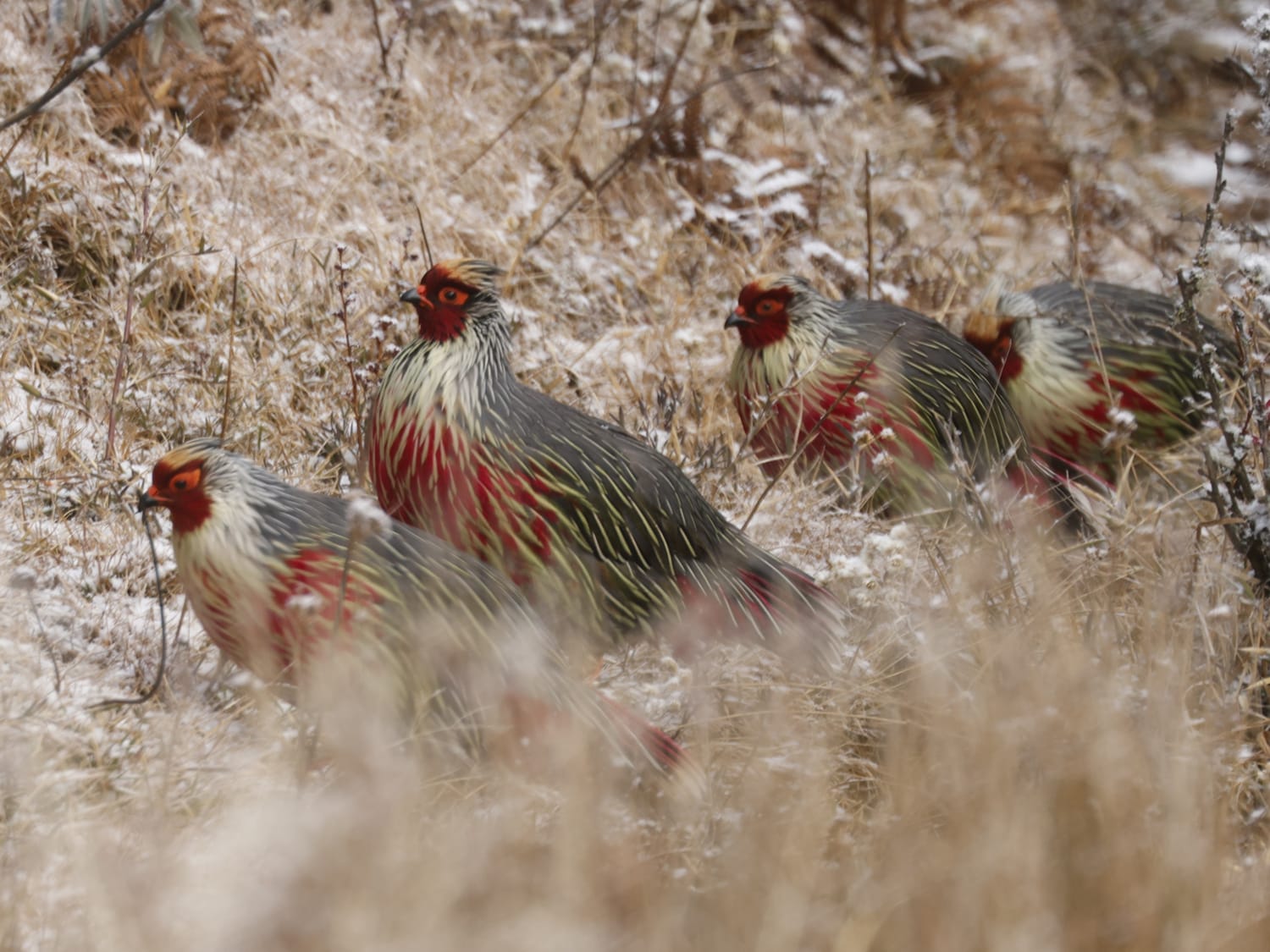
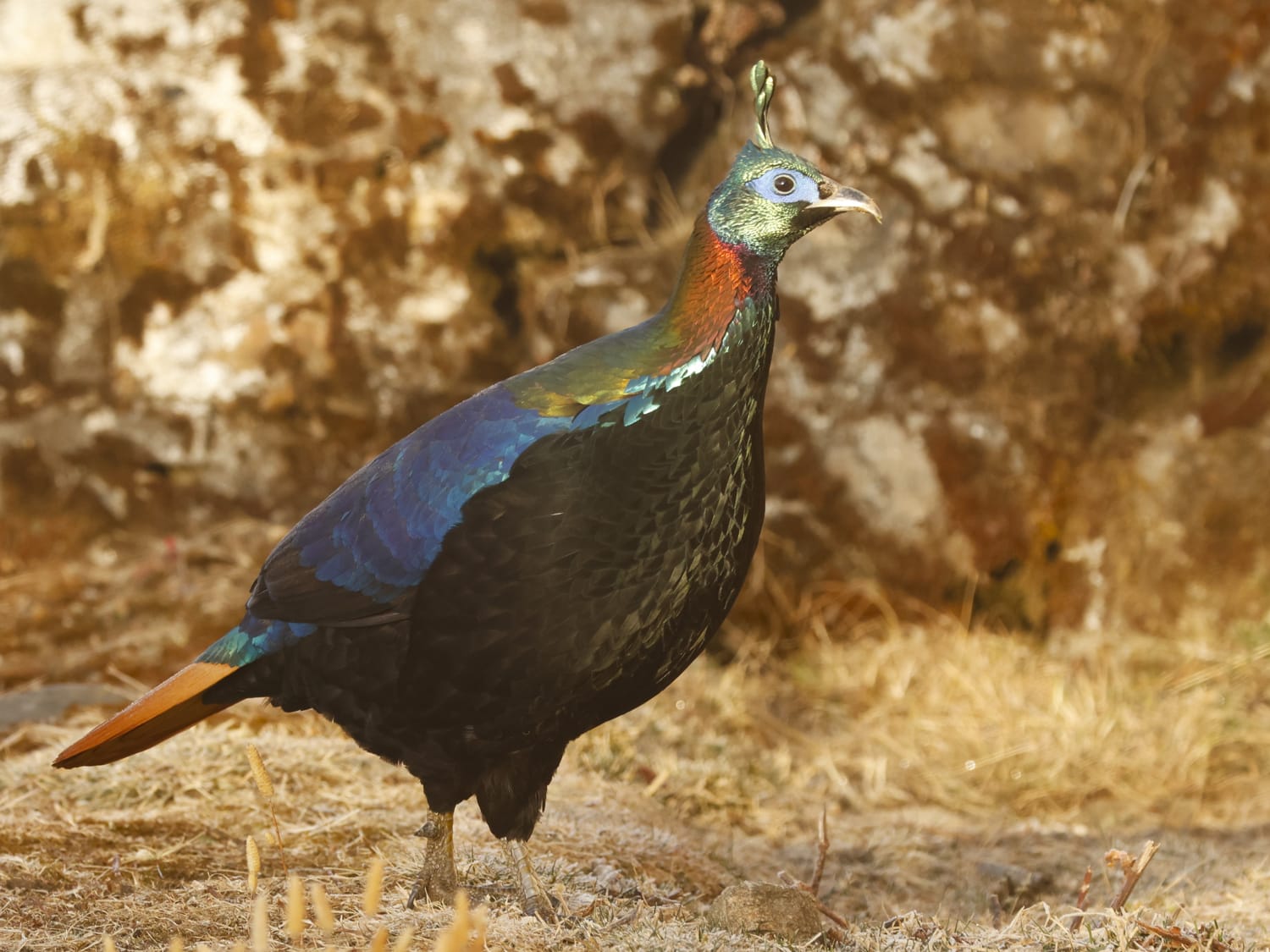
Our trip will introduce us to some of the iconic birds of the eastern Himalayas: the unique Ibisbill along the mountain rivers, colourful pheasants including Himalayan Monal and Satyr Tragopan, Ward’s Trogon on oak-cloaked slopes, and Beautiful Nuthatch in the pristine subtropical forests.
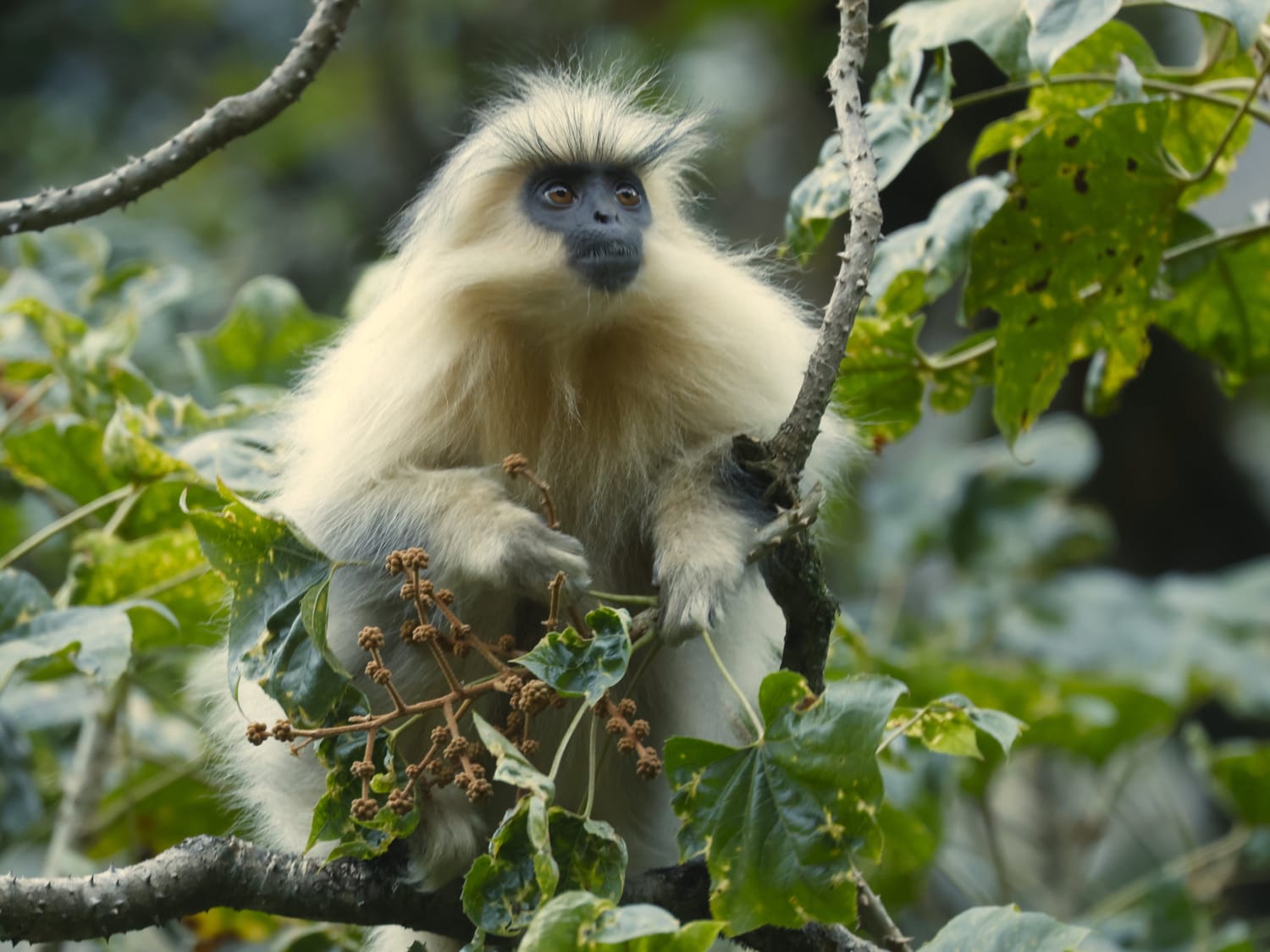
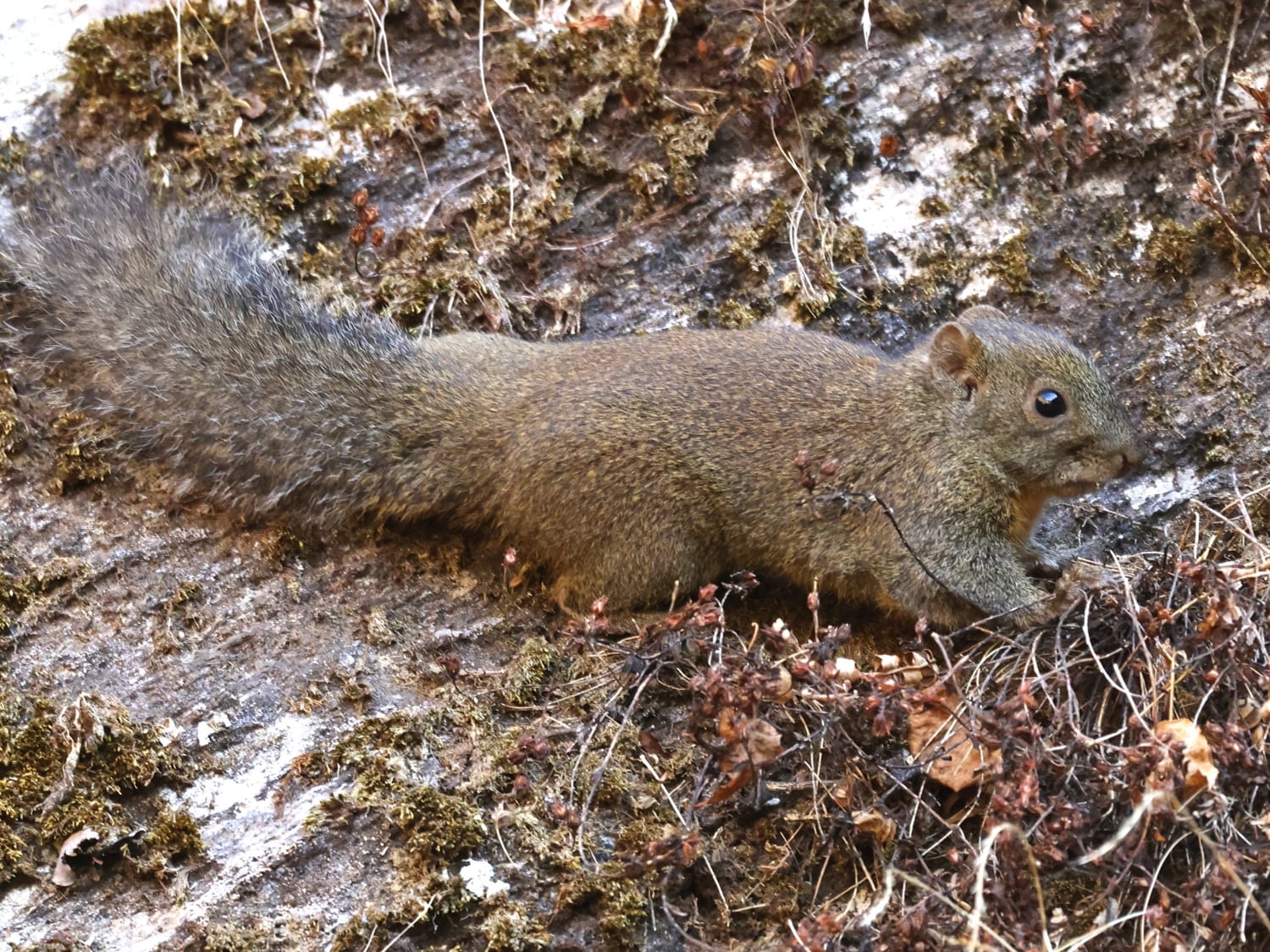
As well as the wonderful bird life, we will of course be paying attention to all the other flora and fauna that may cross our path. The forests will be filled with various flowering rhododendrons, primulas, hydrangeas and more, which in turn attract a variety of butterflies. For the mammal-lovers amongst us, we can expect to see various squirrels, including the Black Giant Squirrel, and four species of primate, including the beautiful Golden Langur. Our travels will also take us through the favoured habitat of the endearing Red Panda, while Dhole, Asian Black Bear and Himalayan Serow all make these forests their home.
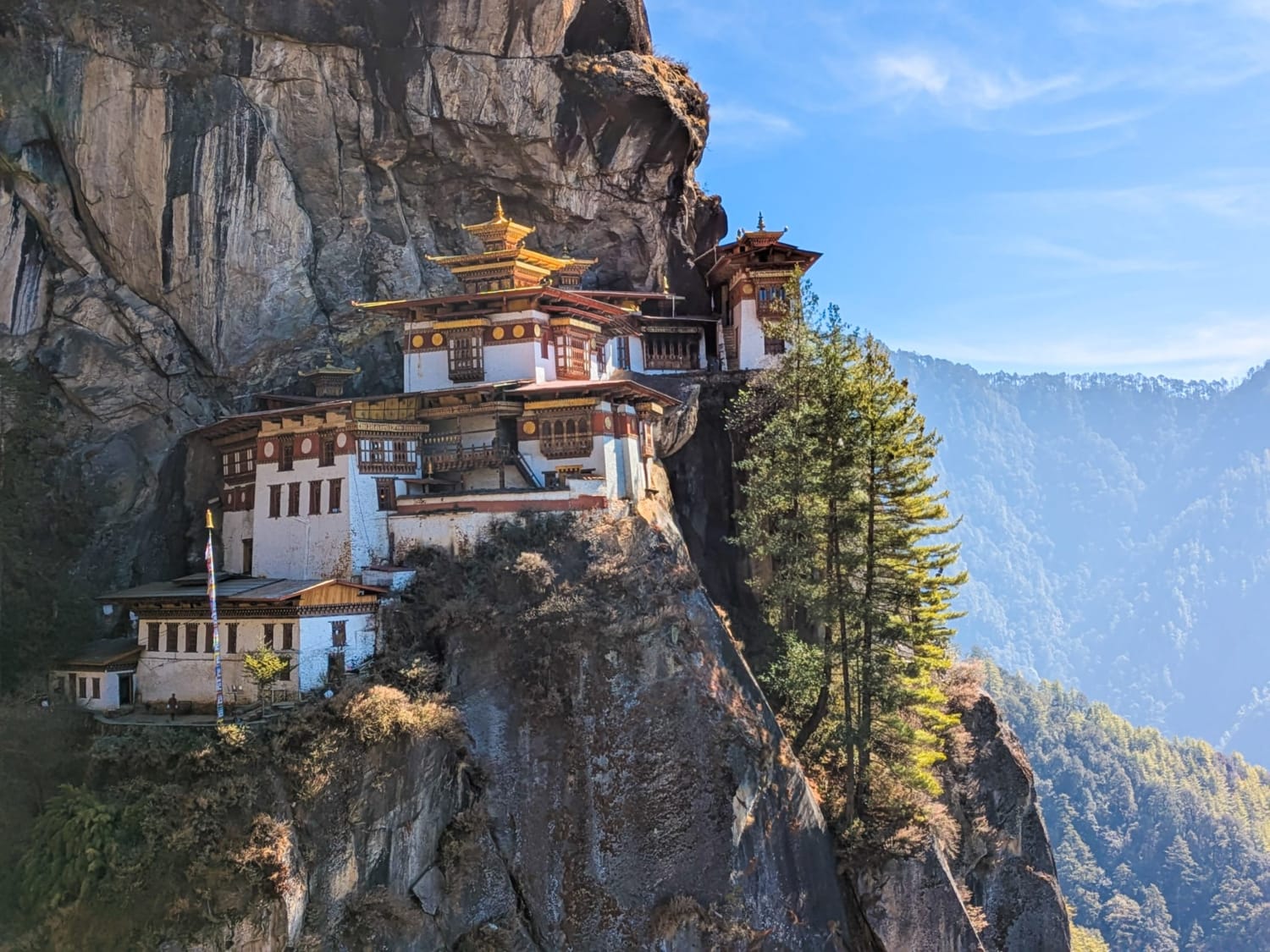
We will enjoy stunning scenery and visit cultural sites including Punakha Dzong, Tharpaling monastery and the iconic ‘Tiger’s Nest’ Paro Taktsang complex.
Please note that holidays change, although sometimes only slightly, from year to year and previous trip reports may not reflect the planned itinerary, or other holiday details, for the current trip. Please ask us if you would like to know of any significant differences.
Day 1 Our overnight flight takes us from the UK to Delhi, arriving early morning Day 2, where we will spend the day at Sultanpur National Park, a wetland and dry forest reserve on the edge of the city. After lunch, we will head back to the airport and our hotel, to rest before tomorrow’s onwards journey.
Day 3 An early flight takes us across the Himalayas, passing Mount Everest along the way, to Bhutan, the Land of the Thunder Dragon. On arrival, we head straight out for our first experience of Bhutanese birdwatching, in search of the iconic Ibisbill on the fast-flowing mountain river between the airport and Thimpu, the country’s capital city, where we will spend a relaxed afternoon.
Day 4 From Thimpu, we cross the Dochu La pass, stopping in the area of Lampelri Park for our first introduction to the birds of the mountains, perhaps including our first laughingthrushes, rosefinches, minlas and yuhinas, before continuing down to Punakha, where we will visit the ‘dzong’, a traditional, fortified monastery building, characteristic of so many Bhutanese towns.
Day 5 From Punakha we travel south to the Phobjikha Valley where we will be keeping our fingers crossed that one or two Black-necked Cranes may have hung on in the valley, before returning to their breeding grounds in Tibet.
Day 6 An early start will see us at Pele La pass, where we will look for some of the colourful pheasants of the eastern Himalayas: Blood Pheasant and Satyr Tragopan are present in the rhododendron undergrowth, along with hyperactive Fire-tailed Myzornis. These forests are home to Clouded Leopard, Tiger, Dhole and Asian Black Bear, although we would have to be very lucky to catch a glimpse.
Day 7 We continue south, spending time in the lush Wanguegang Valley on our way to Tingtibi, nestled amongst the subtropical forests of the lowlands, where we will find a whole new suite of species, including the near-endemic Golden Langur, restricted to this corner of Bhutan and a sliver of neighbouring Assam.
Day 8 A day spent in Royal Manas National Park. Chief amongst today’s targets will be White-bellied Heron, a Critically Endangered resident of pristine forest rivers, with fewer than 100 individuals left in the world.
Day 9 Today we return to the high mountains, birding the areas of Reotala and Kosha La as we wend our way back up to Trongsa.
Day 10 We travel across the Yotong La pass (3,450m asl), from Trongsa to Bumthang, with plenty of roadside birding stops along the way.
Days 11-13 We head into the pristine mid-altitude forests of Thrushing La and the Sengor Valley, home to some of the eastern Himalayas most characterful and sought-after species: Beautiful Nuthatch, Ward’s Trogon, Rufous-necked Hornbill, Himalayan Cutia and Spotted Elachura will all be searched for, as well as Capped Langur and some spectacular butterflies.
Day 14 We retrace our steps, with a last Great Hornbill or roadside gang of White-crested Laughingthrush as we head back up to the mountains.
Day 15 We plan on visiting the imposing monastic complex of Tharpaling, perched high above the valley, where the stunning Himalayan Monal, perhaps the world’s most beautiful pheasant, pays a morning visit: an early start will be needed, but the rewards are well worth it. As the day warms up, we head back the way we came, travelling westwards to Punakha.
Day 16 We travel back to Paro, with a last chance of looking for Ward’s Trogon in the roadside oak forests.
Day 17 This morning we will hike up to the iconic Tiger’s Nest Monastery, perched above Paro, before spending some time relaxing in town. o/n Paro
Day 18 After one last look at the Ibisbills on the river, we bid farewell to Bhutan and fly back to Delhi, where we will spend the night in an airport hotel before our flight back to London next morning, Day 19.
Please note that the itinerary may be changed to suit the weather or other practicalities at the discretion of the leaders.
All of the hotels are of a good standard, some with very attractive settings. All the rooms have private bathrooms. All meals are included.
We will be travelling by small minibus/minivan for this trip. We will do our best to ensure that our travelling is as comfortable as possible, taking plenty of stops for comfort breaks and to enjoy interesting areas.
Group flights
Group flights are with with Virgin Atlantic from London Heathrow to Delhi and then on to Paro with Drukair.
30th April depart London Heathrow 20.00, arrive Delhi 09.10 (1st May)
2nd May depart Delhi 04.45, arrive Paro 07.15
17th May depart Paro 11.55, arrive Delhi 13.45
18th May depart Delhi 11.00, arrive London Heathrow 16.10
Time zone
Bhutan is six hours ahead of UK time. Delhi is five and a half hours ahead of UK time.
Entry requirements
If you hold a British passport you must apply for a visa in advance to enter Bhutan. The visa cost and the US$100 daily tourist tax will be arranged through our local partners, and the costs are included in the holiday price. Your passport must have an expiry date at least six months after the date you plan to leave Bhutan. You must have a visa to visit India and your passport must have an expiry date at least six months after the date you arrive and have at least two blank pages.
It is generally dry and cool in the mountains, with typical daytime temperatures between 10° and 26°C. It will be considerably cooler in the early mornings and at altitude, with the chance of rain and even snow at the high mountain passes.
You will need to have a reasonable level of general fitness to get the most from the holiday. Although most of the walks are not long, we will sometimes be walking on uneven, rocky terrain or wet ground. There are a few occasions when we walk uphill but this is not excessive.
We will be spending time at altitudes of up to 4,000m asl, with the average elevation on this itinerary around 2,400m. There is some risk of altitude sickness although rest and drinking plenty of water usually relieve any mild effects (headaches and tiredness). If you have suffered from altitude problems before or are suffering from any medical condition, you should take your doctor’s advice. We will be taking it easy at these higher altitudes and none of the walking will be strenuous. The (optional) walk to Tiger’s Nest monastery is on uneven forest trails, climbing 740m: all walking will be at a very relaxed pace.
We will have some early starts to get the best chances for wildlife watching, with time to rest in the middle of the day.